Skip to content 

The agent loop is a stream of durable events
Every prompt, tool call, and generation is appended at a known offset on a persistent, real-time stream. Replay from any offset, branch off, or fan out to humans, agents, and Electric Agents — over plain HTTP.
Every stream is multiplayer
Streams aren't single-consumer. Any number of agents — and humans — can attach to the same stream, see each other's events as they land, and pick up exactly where they left off. The shared stream is the coordination layer.
The 30-second tour
Four curl commands. Create a stream, append a message, read it back, then tail it live.
Animated terminal walkthrough: creates an Electric Stream, appends a message, reads it back from offset -1, then tails it live with server-sent events.
0:00 / 0:23
Ready to build
Ship your first durable stream in minutes
Install the client, create a stream, and start appending events. Subscribe live from anywhere on the network.
From the blog
Go deeper on Electric Streams, the Durable Streams protocol, and what teams are building on them.



Streaming needs to be durable
SSE drops on a refresh. Tokens get lost on flaky networks. Resuming means re-running the request and re-billing the LLM.
Real apps need streams that survive disconnects, persist across sessions, and let many users and agents read and write the same conversation. That's what an Electric Stream is.
Comparison of two streaming token responses. Without Electric Streams, a dropped connection forces a full retry that re-bills the LLM. With Electric Streams, the client resumes from the last offset and only the missing tokens stream in.
Three properties that change everything
Electric Streams is a protocol, not a SaaS. The protocol is the product.
{ url }
URL-addressable
Every stream lives at its own URL. Works with curl, fetch, any load balancer, any CDN.
PUT /v1/stream/hello
POST /v1/stream/hello
GET /v1/stream/hello
▤ append-only
Append-only
Once data is at an offset, it never changes. Offsets are opaque cursors that always sort in order.
POST → 200 OK
Stream-Next-Offset:
01JQXK5V00
↻ resumable
Resumable
Reads return Stream-Next-Offset. Reconnect with ?offset=… and pick up exactly where you left off.
GET ?offset=01JQXK5V00
→ next chunk only
Diagram showing a producer service posting chunks to an Electric Stream server that de-duplicates by Producer-Id, Producer-Epoch and Producer-Seq headers, while a consumer client reads chunks and resumes from the last offset it saw after a connection drop.
Replay from any offset, exactly once
Producers identify themselves with three headers. Servers de-dupe. Clients resume from the last offset they saw. No external coordination required.
It's just HTTP — works everywhere
If your runtime can speak HTTP, it can read and write an Electric Stream. No SDK lock-in. No proprietary transport. No WebSocket infrastructure.
A single HTTP stream URL is consumed by five clients written in TypeScript, Python, Swift, Go and curl. Each receives the same server-sent events.
one URL, every client
One protocol, four layers
Pick the layer you need. Bytes → JSON messages → typed CRUD events → reactive type-safe DB. Every layer above adds power; every layer below remains available.
01 · the wire
Electric Streams
Append bytes, replay from any offset. The HTTP base protocol every other layer is built on.
PUT /v1/stream/x
POST /v1/stream/x
GET /v1/stream/x?offset=…
Concepts →
02 · messages
JSON mode
Append JSON values, GET arrays. Message boundaries are preserved on the wire — no framing logic in your code.
Content-Type: application/json
POST → {"hello":"world"}
GET → [ {…}, {…}, {…} ]
JSON mode →
03 · typed CRUD
Durable State
Typed insert / update / delete events on the wire, plus snapshot markers. Materialise them into a live key-value view.
{"type":"user","value":{…},"headers":{"operation":"insert"}}
{"type":"user","key":"1","headers":{"operation":"delete"}}
{"headers":{"control":"snapshot-end"}}
Durable State →
04 · reactive DB
StreamDB
Live, typed collections with queries and optimistic actions, layered on top of MaterializedState.
db.users.where({ … })
db.users.insert(row)
useLiveQuery(query)
StreamDB →
Open protocol · Apache 2.0
Built on the open Durable Streams protocol
Electric Streams is one implementation. The protocol spec, conformance suite and reference clients live on durablestreams.com — independent, fully open.
Built for the agent loop
From token streams to multi-agent collaboration — Electric Streams plugs into the AI stack you already use.

Your stack, not ours
Self-host the server with one binary, or run it on Electric Cloud. Producers and consumers are anything that speaks HTTP.
Your producer
Anthropic · Express · FastAPI · cron
POST /v1/stream/…
Electric Streams
Electric Cloud · self-host
GET ?live=sse · ?offset=…
Your consumer
browser · agent · worker · iOS · Python
import { DurableStream, IdempotentProducer } from "@durable-streams/client"

const handle = await DurableStream.create({
  url: STREAM_URL,
  contentType: "application/json",
})

const producer = new IdempotentProducer(
  handle, "llm-relay-1", { autoClaim: true }
)

for await (const chunk of llm.stream(prompt))
  producer.append(chunk)

await producer.flush()Your first stream, end to end
Create a stream. Append a message. Subscribe live. Three steps, one package, real APIs.
stream.ts
import { DurableStream, stream } from "@durable-streams/client"

const url = "https://streams.example.com/v1/stream/chat"

const handle = await DurableStream.create({
  url,
  contentType: "application/json",
})

await handle.append(JSON.stringify({
  role: "user", text: "Hello"
}))

const res = await stream<{ role: string; text: string }>({
  url,
  offset: "-1",
  live: "sse",
})

res.subscribeJson(async (batch) => {
  for (const msg of batch.items) console.log(msg)
})
Terminal
$ npx tsx stream.ts
✓ Created stream chat
✓ Appended message
→ { role: "user", text: "Hello" }
→ { role: "assistant", text: "Hi there!" }
→ ▍
1
One package, two entry points
DurableStream for read/write handles. stream() for fetch-style consumption.
2
DurableStream.create opens or createsIdempotent: returns the existing handle if the stream already exists.
3
Pick your content type
application/json enables JSON mode — message boundaries are preserved.
4
Append messages
Each append is a single POST. Wrap with IdempotentProducer for exactly-once delivery and batching.
5
Resume from any offset
"-1" = beginning. Pass a saved offset to resume from exactly that point. "now" = skip the backlog.
6
Live, in real time
"sse" opens a long-lived Server-Sent Events stream. "long-poll" works in environments that can't hold a connection open.
7
Subscribe with batches
subscribeJson calls your handler with a batch.items array. The batch carries the next offset — save it to resume from later.
Demos
Reference apps you can clone, run locally, and learn from.
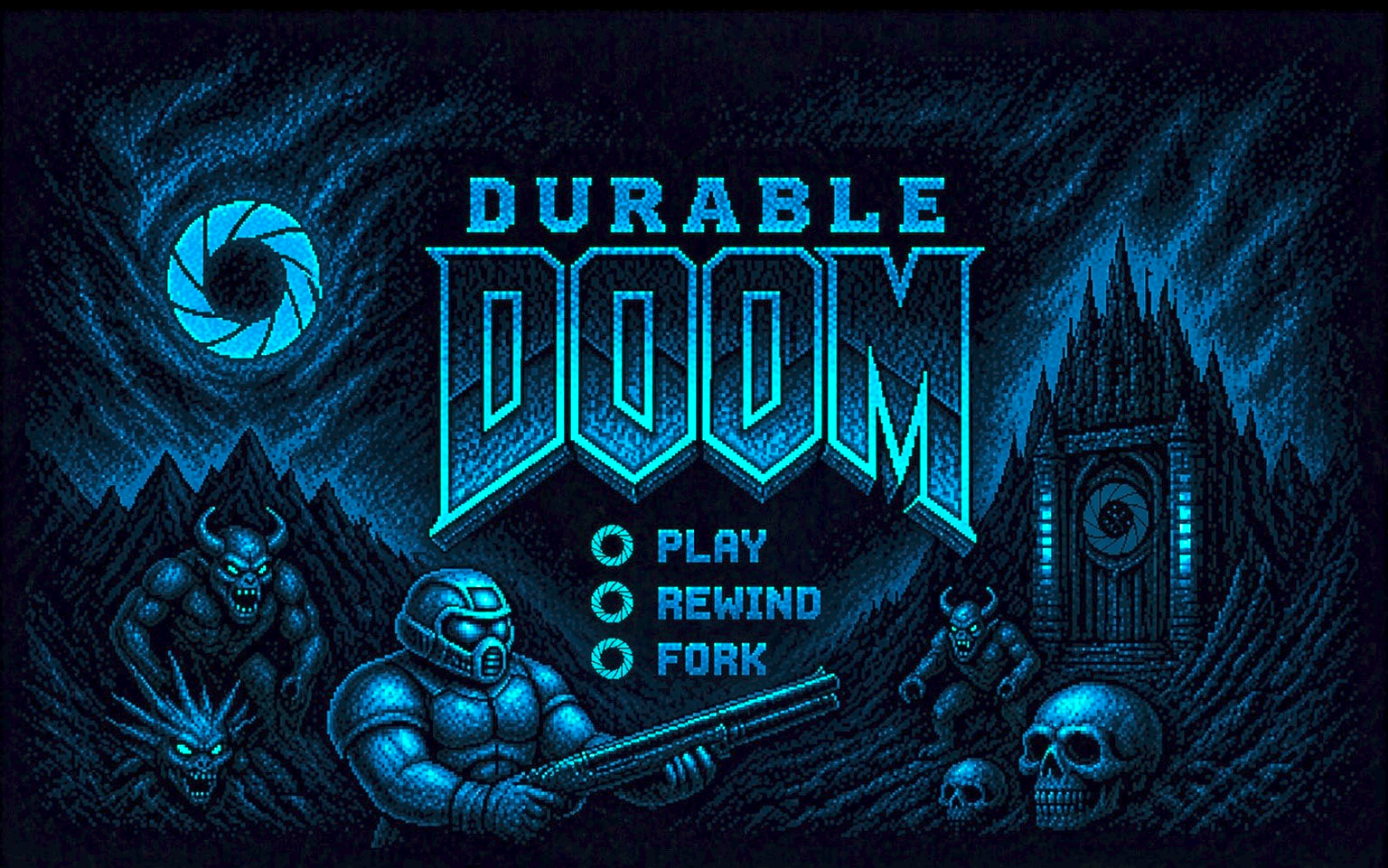
Durable Doom
Doom on Durable Streams. Live spectating, time-travel, and fork-to-continue — all client-side, no backend.
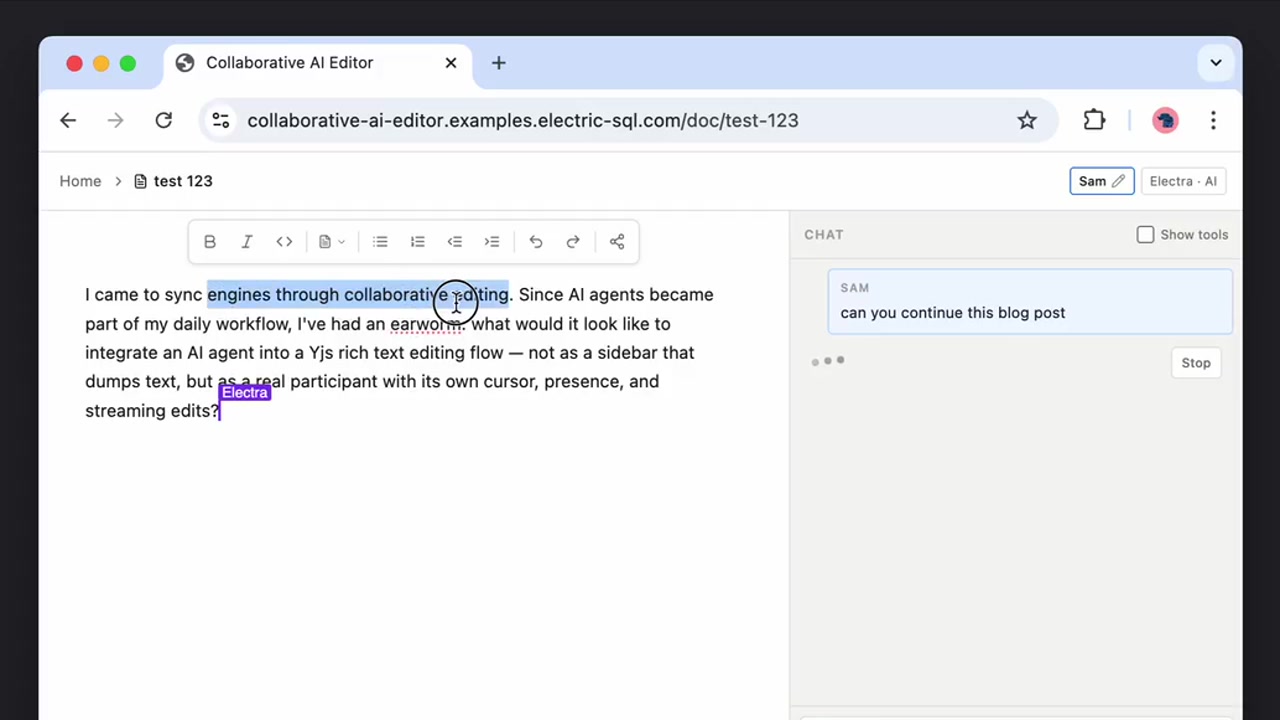
Collaborative AI Editor
Collaborative rich text editor where an AI agent is a server-side CRDT peer.
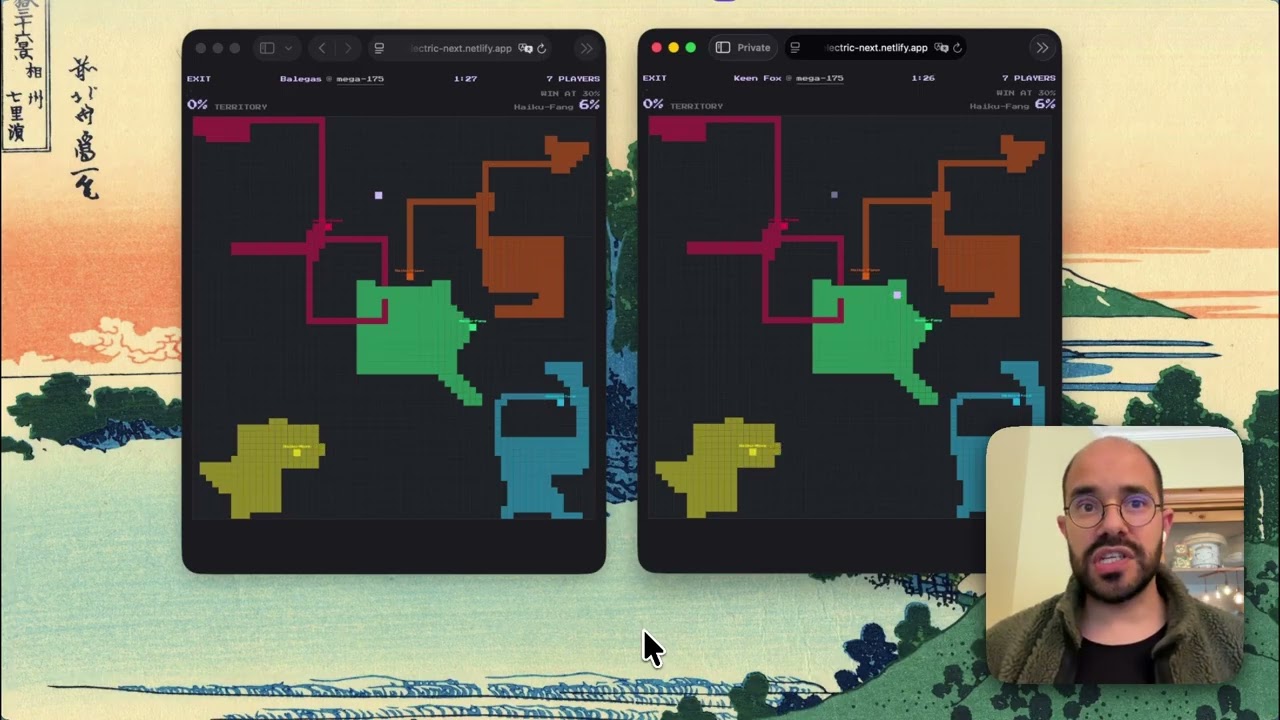
Territory Wars
Multiplayer territory capture game built with Yjs CRDTs on Durable Streams.
Apache 2.0 · open source
Start streaming today
Create a stream, append events, subscribe live.