




Electric 1.1: new storage engine with 100x faster writes
 Ilia Borovitinov
A behind‑the‑scenes look at Electric's new storage engine: why we built it, how it works, and how it improves performance in production.

Read-path sync engine for Postgres that handles partial replication, data delivery and fan-out.
Postgres Sync is a sync engine that syncs subsets of your data out of your Postgres database, into local apps and services.
You can sync data into anything you like. From web, mobile and desktop apps and client stores like TanStack DB to databases like PGlite.
🎓 A quick note on naming
Postgres Sync used to just be called "Electric" or the "Electric sync engine". Some docs and package names still use the old naming.
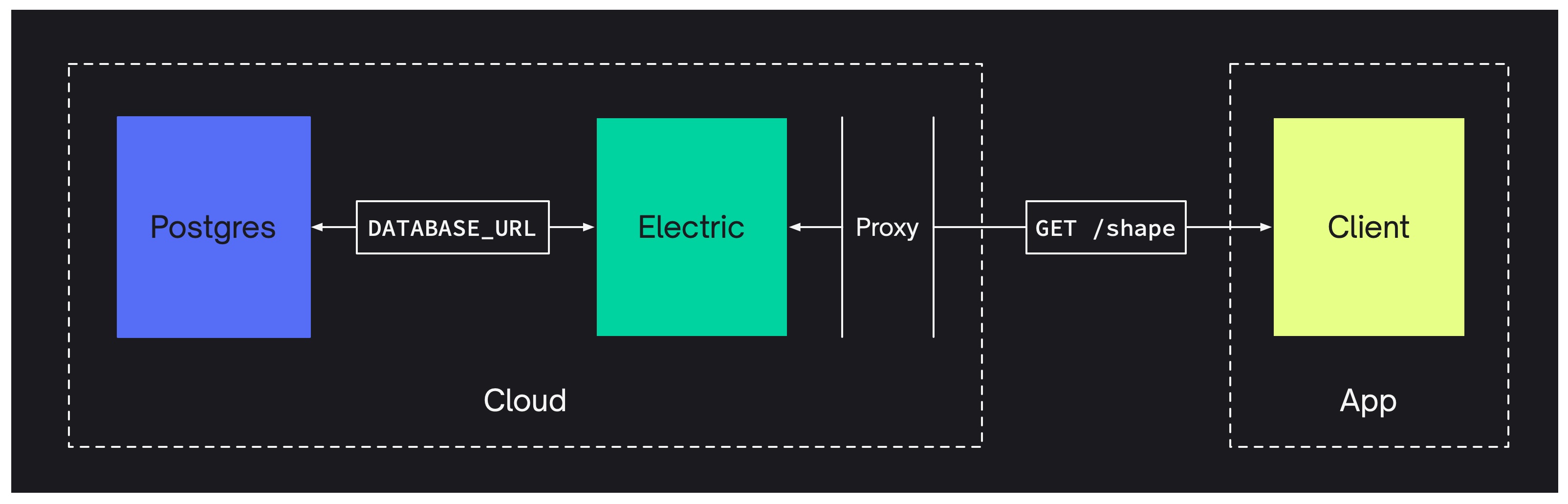
Postgres Sync connects to your Postgres using a DATABASE_URL, consumes the logical replication stream and fans out data into Shapes, which Clients then consume and sync.
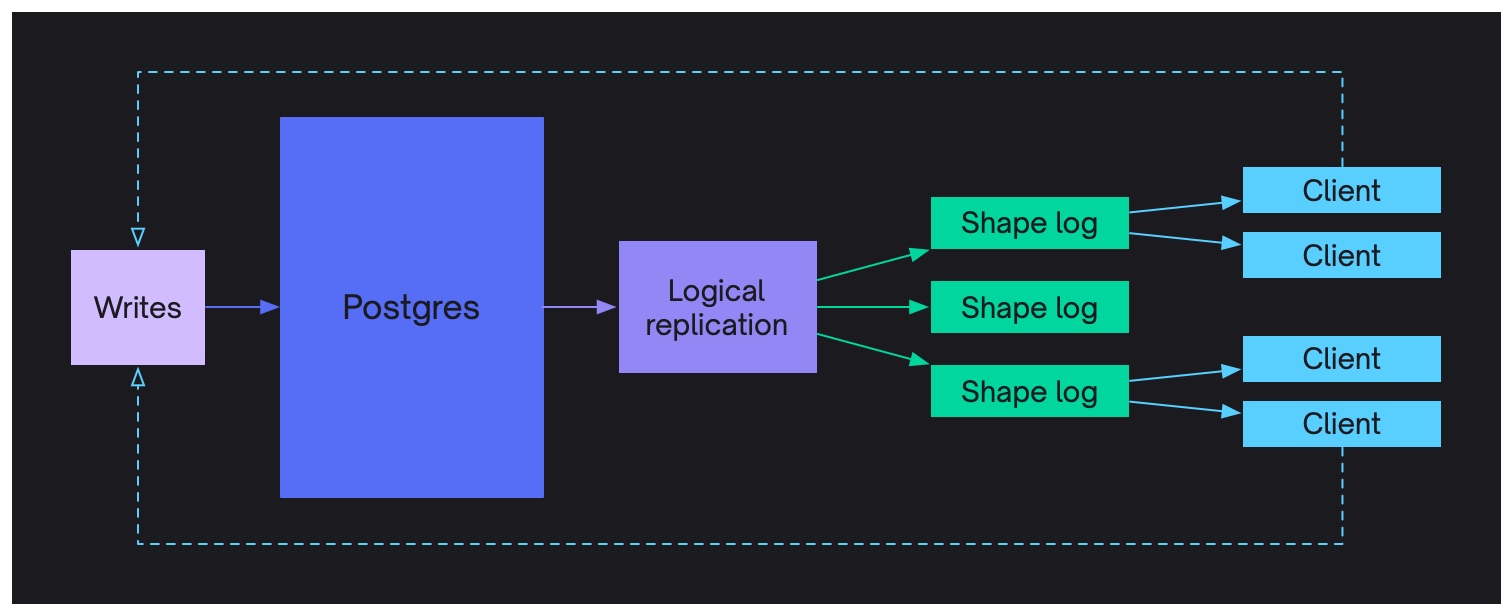
Technically, Postgres Sync is an Elixir application, developed at packages/sync-service. It runs as a seperate service, between your API and your database. Clients consume data over an HTTP API that works with CDNs to scale data delivery and fan-out.
The same shape log is delivered to every subscriber — web tabs, mobile devices, server workers, agents — in real time, with the same ordering and guarantees. This allows you to have millions of concurrent users subscribing to real-time updates to your database with minimal additional load on your database.
A Shape is a SQL query against your Postgres. Postgres Sync carves out the matching rows and keeps them live for every client that subscribes.
SELECT *
FROM issues
WHERE assignee = 'alex'
AND status = 'open'See the Shapes guide for the full shape definition syntax, including where clauses, columns projection, and progressive loading.
Your shape defines the outer bounds — the slice of Postgres a user is allowed to see. Live queries running on the client narrow that slice further, syncing only the rows actually needed for the current view.
WHERE priority = 'urgent' loads 15 / 98 rows TanStack DB has this built in. Pick the sync mode that fits the work: eager to preload everything for instant interactions, on-demand to fetch only what the current query needs, or progressive to start fast and fill in the rest in the background.
See the Live queries guide for the full TanStack DB sync-mode reference.
Postgres Sync handles the read path. Writes go through your existing backend — pick how much sync you want on top.
POST or PUT to your existing endpoints. The Postgres txid flows back through the read path.
Learn more →Many clients hit the same backend. Sync delivers the same change to every reader.
Learn more →UI updates instantly. The collection awaits the txid on the stream and reconciles.
Learn more →See the Writes guide for the four write patterns and how to pair them with optimistic mutations in TanStack DB.
See the Quickstart, the Stacks overview, and the HTTP API reference. The full source is on GitHub at electric-sql/electric.